Buying a plot of land to build your home is a major decision. At first glance, a plot may seem perfect because of its location, price or views, but before finalising the purchase, it is advisable to check a number of factors that will determine whether you can actually build the house you have in mind.
In this checklist, we outline what you should bear in mind before buying a plot of land. Before signing the purchase agreement, it is advisable to carry out various checks on the plot in four key areas:
Below, we detail the procedures and key aspects you should review before buying a plot of land to build your home.
A planning check determines whether building is actually permitted on the plot and under what conditions. This information is governed by the local planning regulations and can usually be obtained from the local council. The most important document at this stage is the urban planning certificate.
The urban planning certificate is an official administrative document of an informative nature issued by the town council’s town planning and housing department, corresponding to the jurisdiction in which the plot is located. To apply for it, you will need to provide certain documents and, once validated, the report will be issued within a maximum of one month.
It is a document detailing all the characteristics of the land and determining whether it is legal to build in that area. It provides precise information on what can be built on the land, what limitations exist, details regarding land classification, buildable area, permitted uses and other legal restrictions. It is essential for avoiding penalties and ensuring that the project complies with municipal regulations.
It is an essential report when purchasing a new-build property, as it certifies that the construction complies with current town planning regulations. Its existence not only validates the legality of the property but also provides guarantees to the buyer, ensuring that the transaction is carried out with complete transparency and security.
So, what does the urban planning certificate include?
Land classification determines its legal status and, consequently, its actual development potential. In practice, it defines whether construction can proceed immediately, whether it will be necessary to wait for future development phases, or whether there are limitations that prevent building altogether.
Each plot is subject to planning conditions established by the municipality’s planning authority, which determine its classification as well as its permitted uses and development potential. These conditions are set out in the Plan General de Ordenación Urbana (PGOU), the document that governs and organizes territorial development.
For this reason, before starting any project or acquiring land, it is essential to understand its planning classification—whether it is classified as urban land, developable land, or non-developable land. This will determine not only what can be built, but also when and under what conditions.
Developable Land: land designated for future development, but which may still require administrative processes—such as partial plans or land readjustment projects—before construction can take place.
Non-Developable Land (Rural Land): land where residential construction is generally not permitted, except in very specific cases linked to agricultural activities or exceptional circumstances.
Zoning designation refers to the assigned use of a plot of land and the building potential it allows. Each type of land is subject to specific uses defined by the applicable planning regulations. In general, these uses can be grouped into two categories:
Not all plots allow residential construction, so it is important to verify this before proceeding with a purchase.
Permitted Housing Typologies
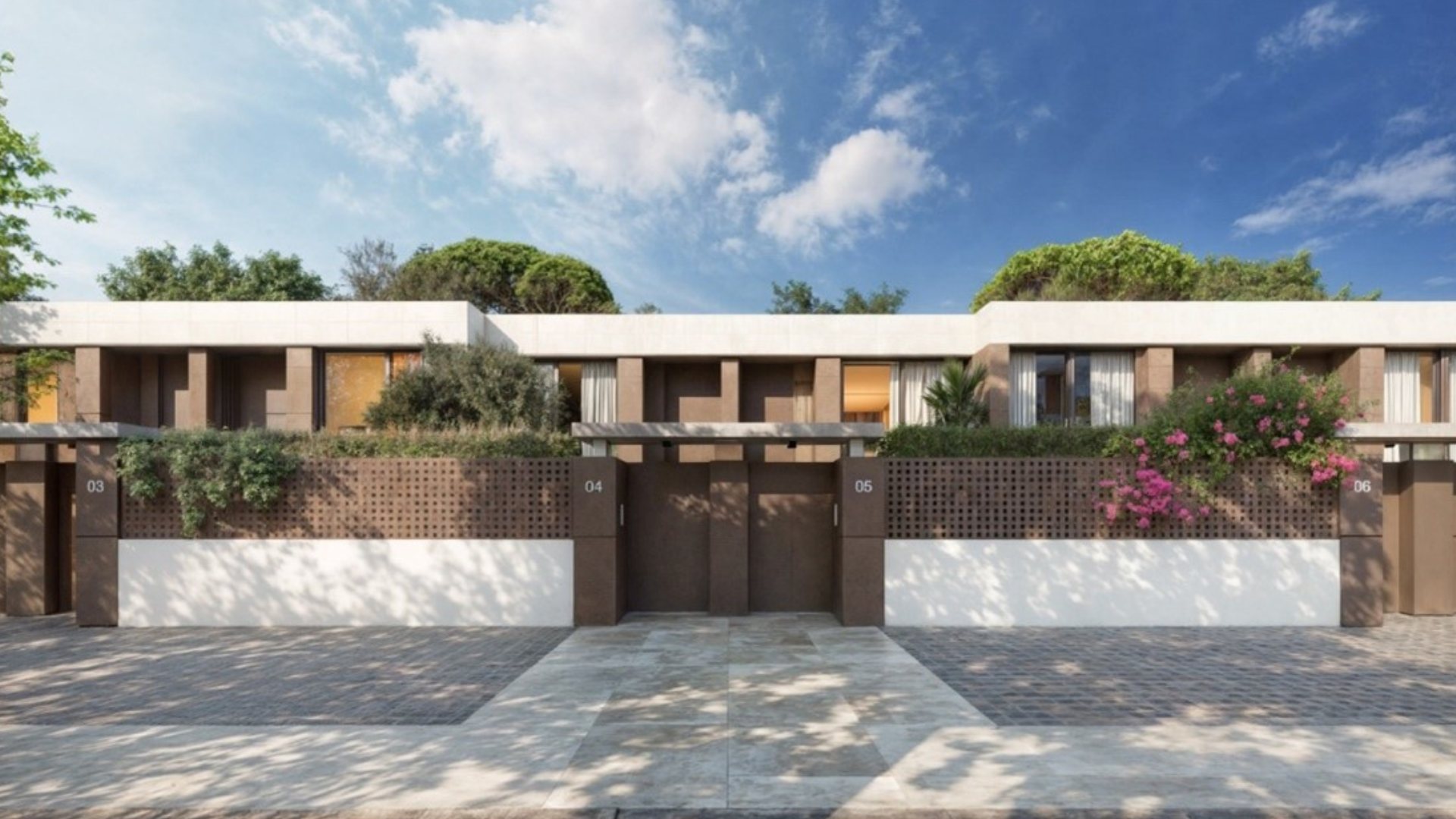
Within residential use, urban planning regulations also define the type of dwelling that can be built on a plot. The permitted typologies for single-family housing are three: terraced, semi-detached, and detached. Although at inHAUS we design and build detached single-family homes in 99% of cases.

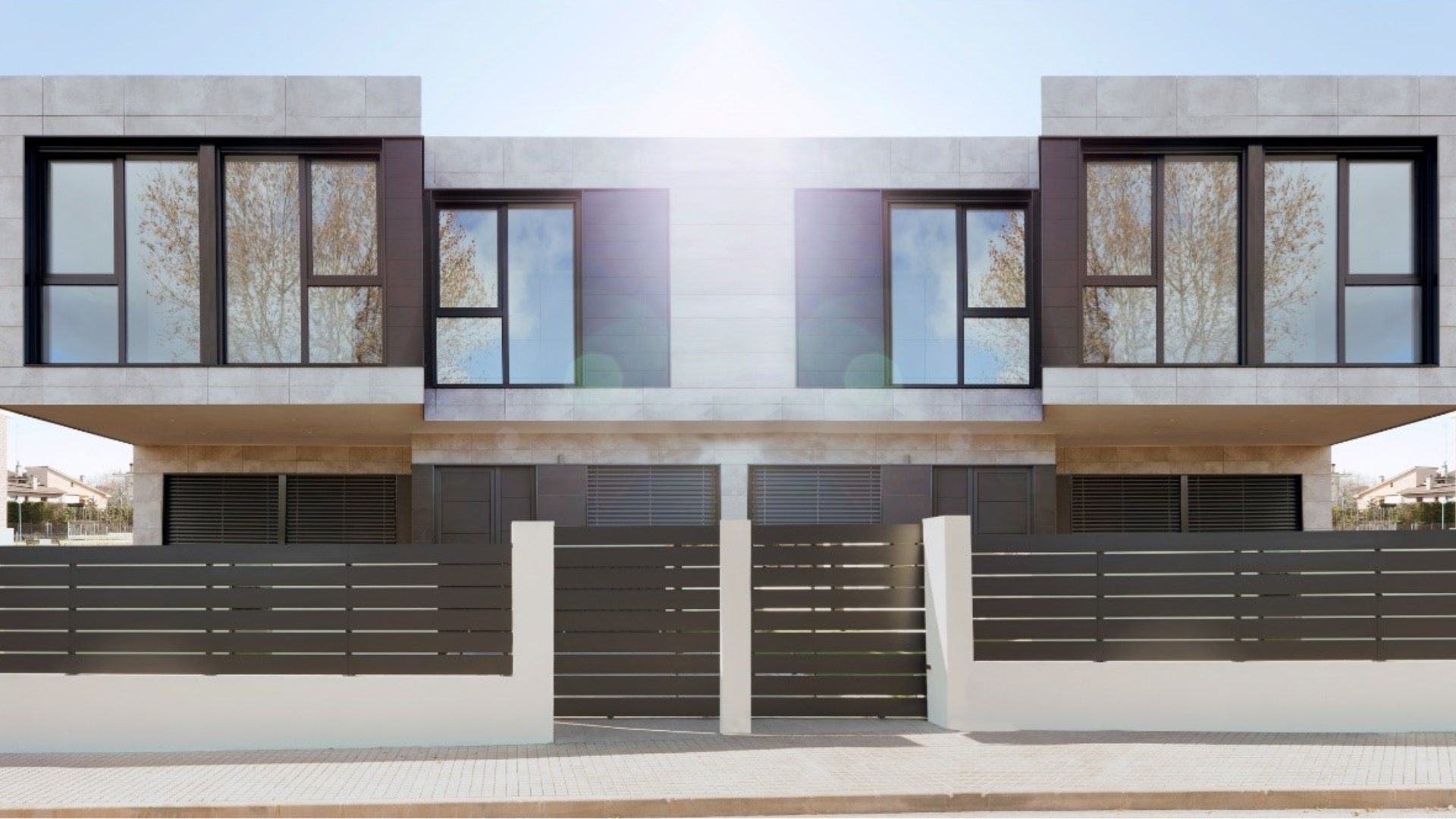
Semi-detached house: a dwelling that shares one common wall with an adjacent property on one side only.
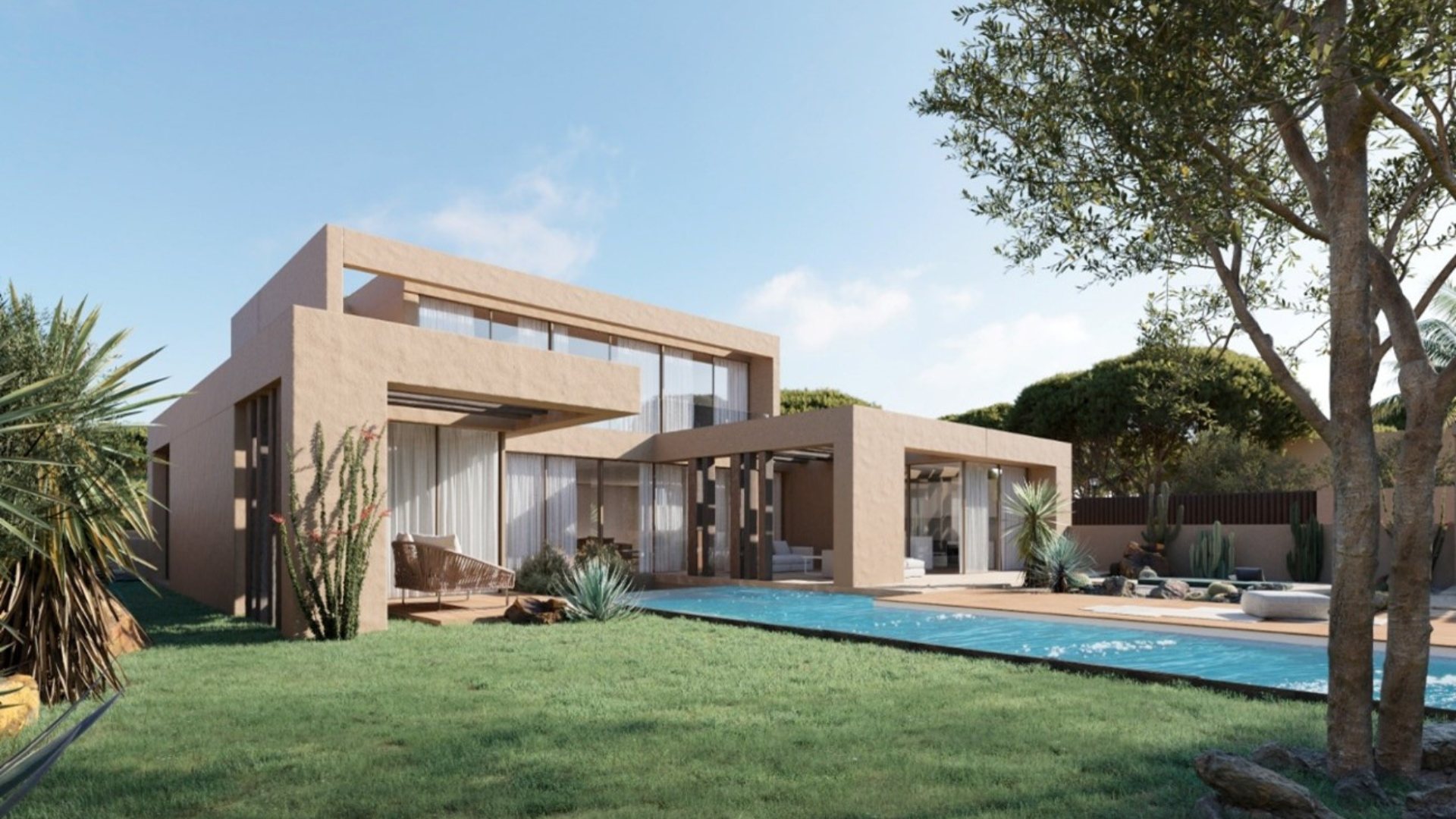
Detached house: a dwelling that does not share any walls with other properties, meaning it is surrounded by its own plot of land.
Terraced house (or townhouse): a dwelling that shares walls with adjacent properties on both sides.
Building capacity refers to the maximum floor area that can be constructed on a plot. It is usually expressed as a ratio between the buildable floor area and the total land area. This parameter determines the maximum size a dwelling can have. For example, a large plot may have limited building capacity, meaning that it is not always possible to build as much as the land might appear to allow.
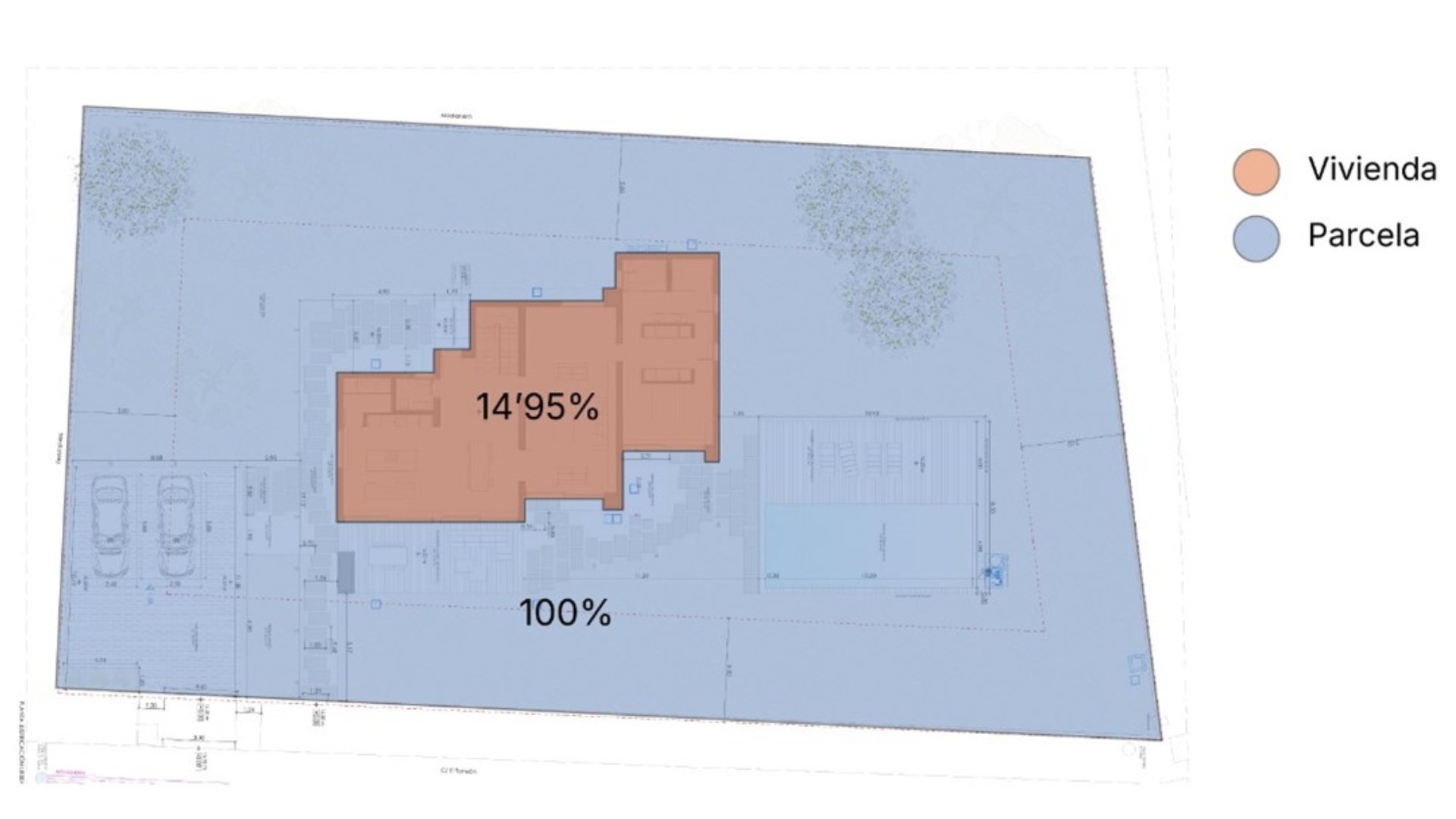
Site coverage refers to the percentage of the plot that can be occupied by the building footprint. For instance, if a plot has a maximum site coverage of 30%, the building may only occupy 30% of the land area at ground level.
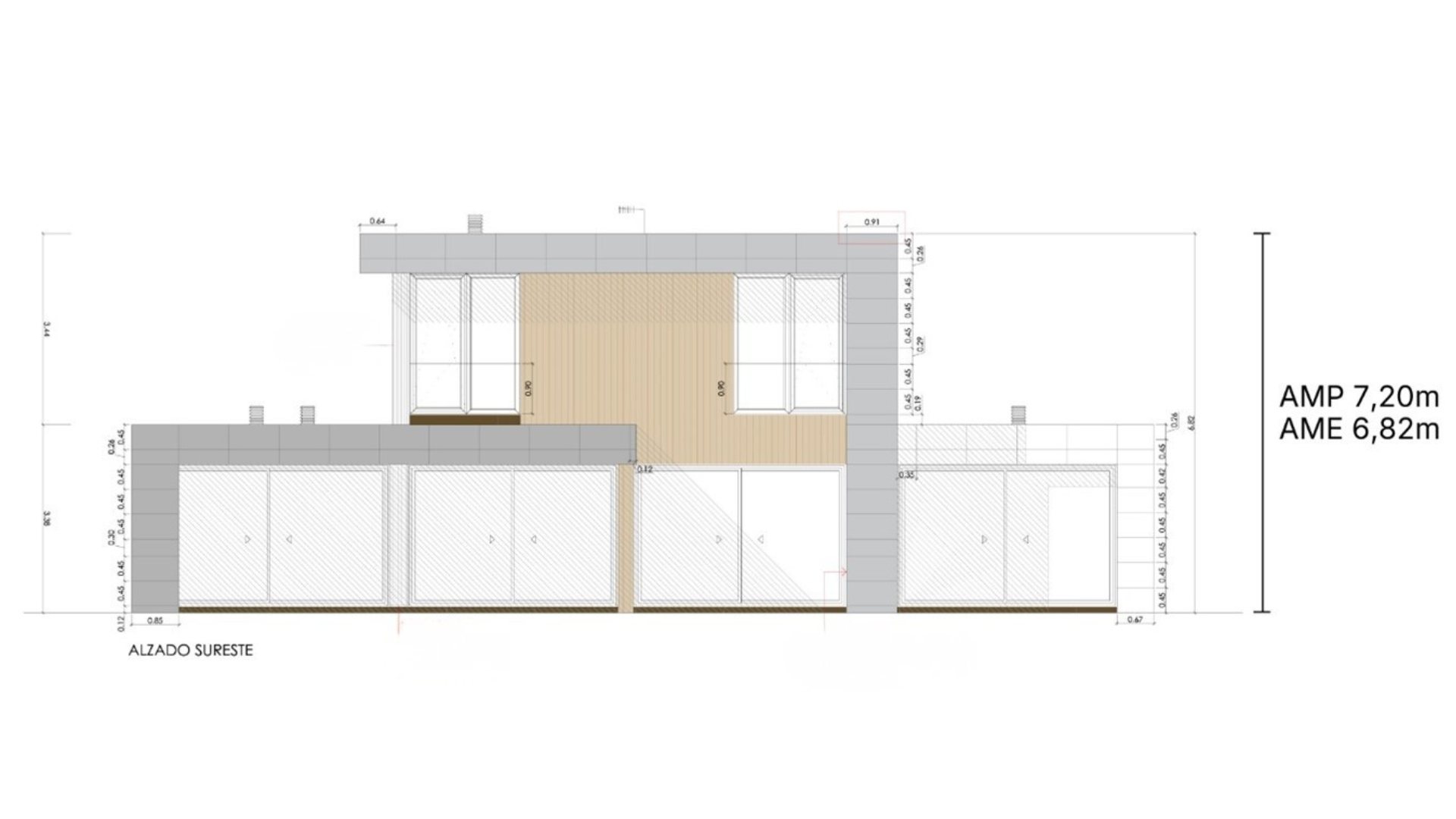
This parameter defines how many storeys or the overall height a dwelling may have. Depending on the applicable planning regulations, the rules may allow a single storey, two storeys, or a ground floor plus a specified maximum height.
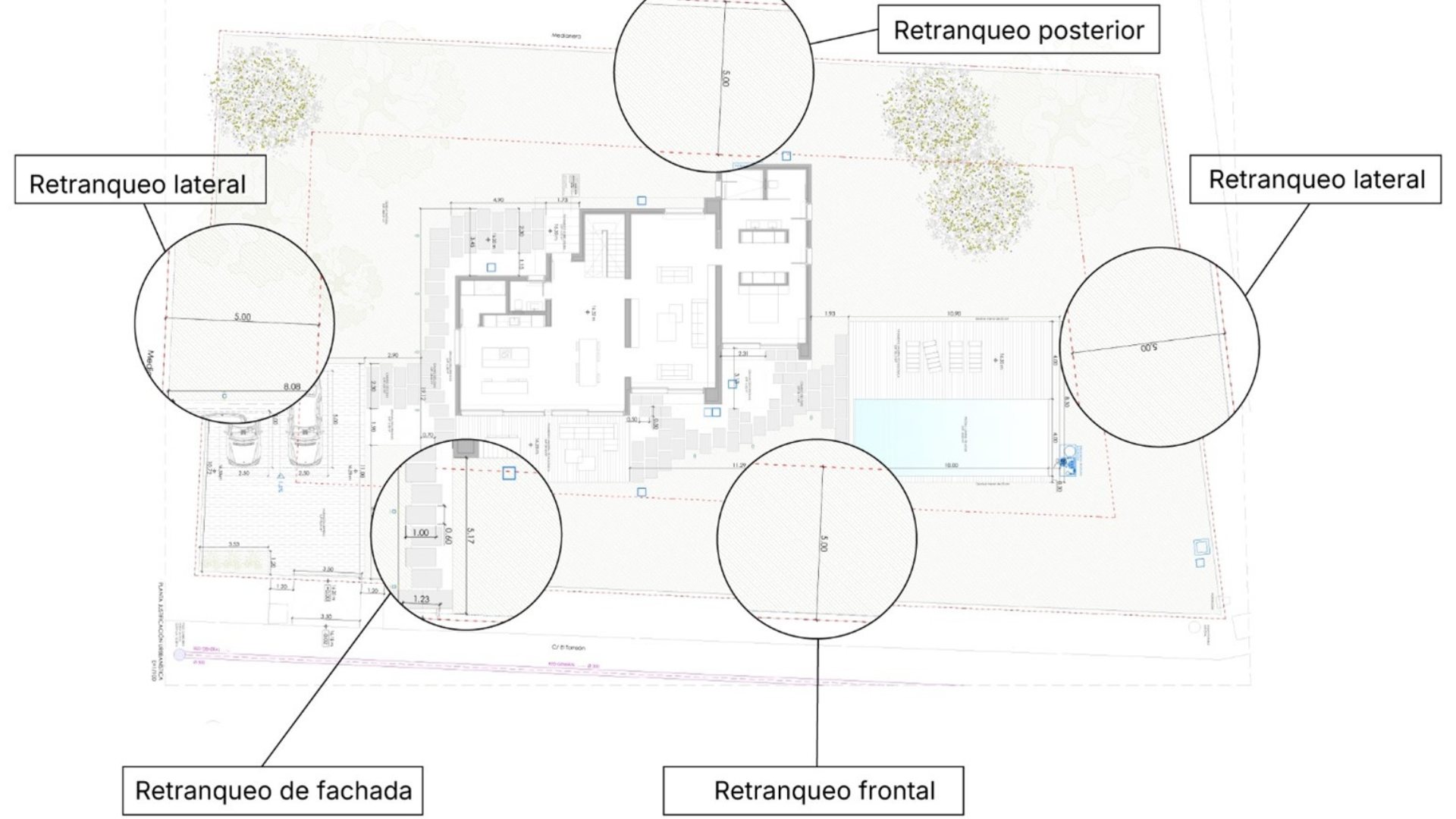
Setbacks are the minimum distances that a building must maintain from the plot boundaries or from the street. These parameters directly influence the positioning of the house within the plot and the overall design of the project.
Once the urban planning regulations have been reviewed, the next step is to verify that the plot is legally compliant and that there are no legal issues associated with the land. To do so, it is essential to review two key documents.
A Land Registry extract is an informative document issued by the Land Registry. It provides an overview of the legal status of a property, allowing verification that the seller is the lawful owner, that the land is free of encumbrances, and that there are no restrictions affecting ownership.
This document includes:
A Cadastral Certificate is obtained through the Electronic Office of the Cadastre (Ministry of Finance) and provides information about the physical characteristics of a plot. There are two types of cadastral certificates:
It is important to verify that the cadastral data matches both the Land Registry records and the physical reality of the plot. If discrepancies exist between these sources, they should be resolved before completing the purchase.
A Certificate of Title and Encumbrances is an official document issued by the Land Registry that formally certifies the legal status of a property. Unlike a Land Registry extract, it is not merely informative, but provides legal proof of ownership and any existing charges or encumbrances (such as mortgages, liens, easements, etc.).
In addition to planning regulations and legal documentation, it is also important to assess the physical characteristics of the land. These conditions can directly influence both the feasibility of the project and the overall construction cost.
A geotechnical study analyses the composition of the soil and determines how the ground will behave when construction takes place. This study provides information on aspects such as soil type, bearing capacity, groundwater level, ground stability, and the type of foundation required.
Although it is usually carried out before construction begins, understanding these characteristics in advance can help anticipate potential additional costs related to the foundation.
A topographic survey provides an accurate understanding of the land’s dimensions and physical characteristics. This study determines the actual surface area of the plot, slopes and level differences, exact boundaries, and the feasible positioning of the dwelling on the site.
Land with steep slopes may require earthworks or retaining walls, which can increase construction costs.
Before purchasing a plot, it is important to verify whether it has the basic infrastructure required to build a dwelling. These may include water supply, electricity, sewerage or drainage systems, telecommunications, public lighting, and road access.
If the plot does not have these services in place, it is necessary to assess the cost of utility connections, which can significantly increase the overall budget.
Finally, it is also important to assess the surrounding environment of the plot. Factors such as solar orientation, access, and proximity to services can influence both quality of life and the future value of the property.
Key aspects to consider include the plot’s orientation, nearby roads and access points, noise or traffic levels, views and natural surroundings, and proximity to essential services.
In addition to the purchase price of the land, it is important to consider the costs associated with the transaction and with preparing the plot for construction. The main costs include:
In addition to registered charges, it is also advisable to verify that the owner is up to date with local taxes, such as property tax (IBI).
Taking all these costs into account allows for a clear understanding of the true overall budget before purchasing the land.
Choosing a plot to build a home should not be based solely on price or location. Before making a decision, it is essential to review planning regulations, the legal status of the property, the technical characteristics of the land, and the costs associated with the purchase.
Carrying out this preliminary checklist helps to avoid potential issues, anticipate costs, and ensure that the plot is truly suitable for the type of home you intend to build.
At inHAUS, when a client plans to build their home, we first assess the plot to verify its viability before starting the project. Choosing the right land is always the first step in ensuring that the future home works as intended.
Estandarización de procesos
Automatización
Lean Manufacturing en fabricación
Integración temprana de todos los agentes del proyecto
Digitalización del proyecto (BMI)
Producción en fábrica
Logística avanzada
Lean Construction en montaje
Whether you are an individual or a professional, do not hesitate to contact us for further information, to request a personalised quote or to make any enquiry.
In our Catalogue 111 you have more than a hundred models of houses to choose from. Register to access information and prices of all models.