In recent years, construction industrialization has evolved from a technological innovation into a strategic tool within real estate development. Its impact goes beyond improving construction efficiency or process sustainability; it directly affects key variables such as:
• construction timelines
• financial predictability of the project
• stability of the development’s cash flow
• construction risk
• the speed of commercialization (sales or leasing)
• the moment when the asset begins generating revenue
In short, the level of industrialization of a building strongly influences the financial performance of a real estate project.
As stated in the report Measuring and Classifying the Industrialization of Buildings, prepared by the Spanish Building Cluster, the level of industrialization of a construction system can be measured based on the percentage of industrialized components included in the building relative to the Material Execution Budget (PEM).
This model defines six levels of industrialization (0–6) depending on the economic weight of industrialized systems within the building.

The most widely accepted definition describes industrialized construction as a system in which building components are manufactured in an industrial environment separate from the construction site.
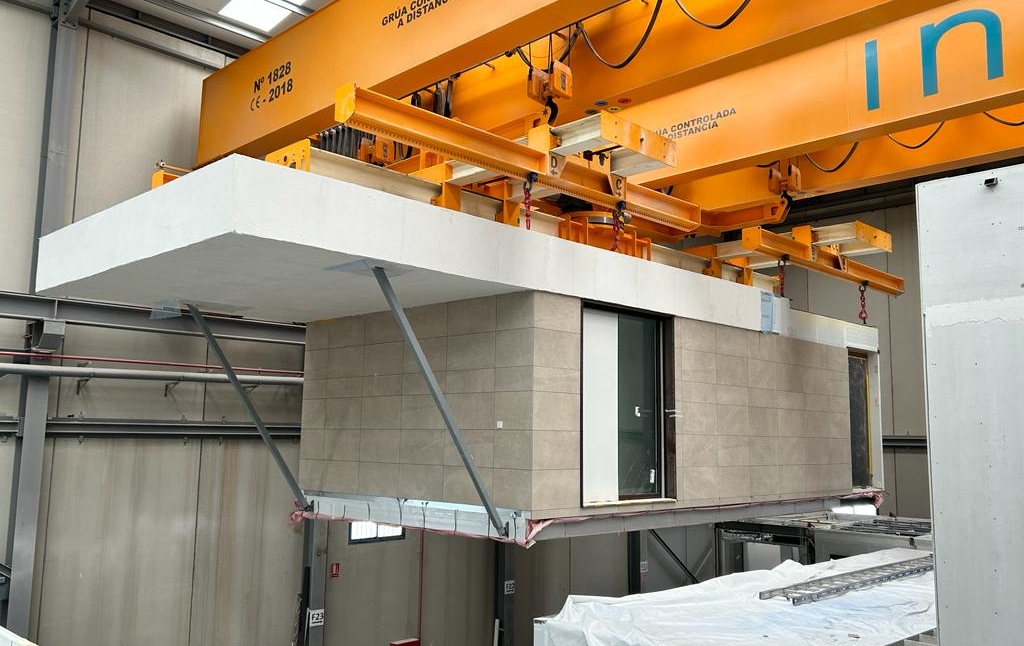
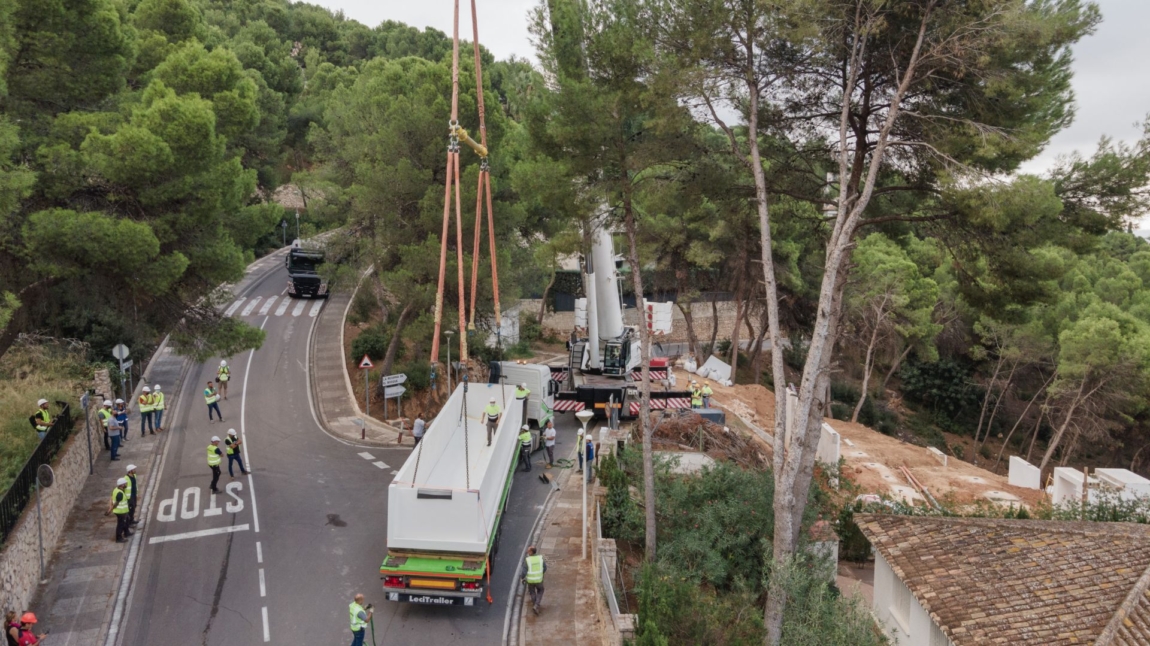
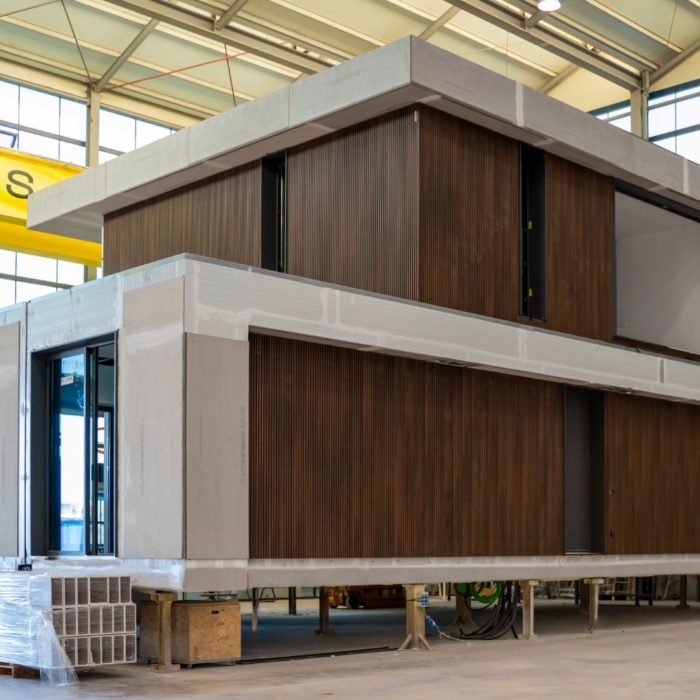
Instead of carrying out all the work directly on-site, a significant portion of the building is produced off-site in a factory, and later transported and assembled at its final location.
This paradigm shift represents a move from a craft-based construction model to an industrialized product model.
Key elements that characterize industrialized construction systems include:
When all these elements are integrated coherently, construction stops being an unpredictable process and becomes a planned production system, positively impacting the project’s financial structure.
Estandarización de procesos
Automatización
Lean Manufacturing en fabricación
Integración temprana de todos los agentes del proyecto
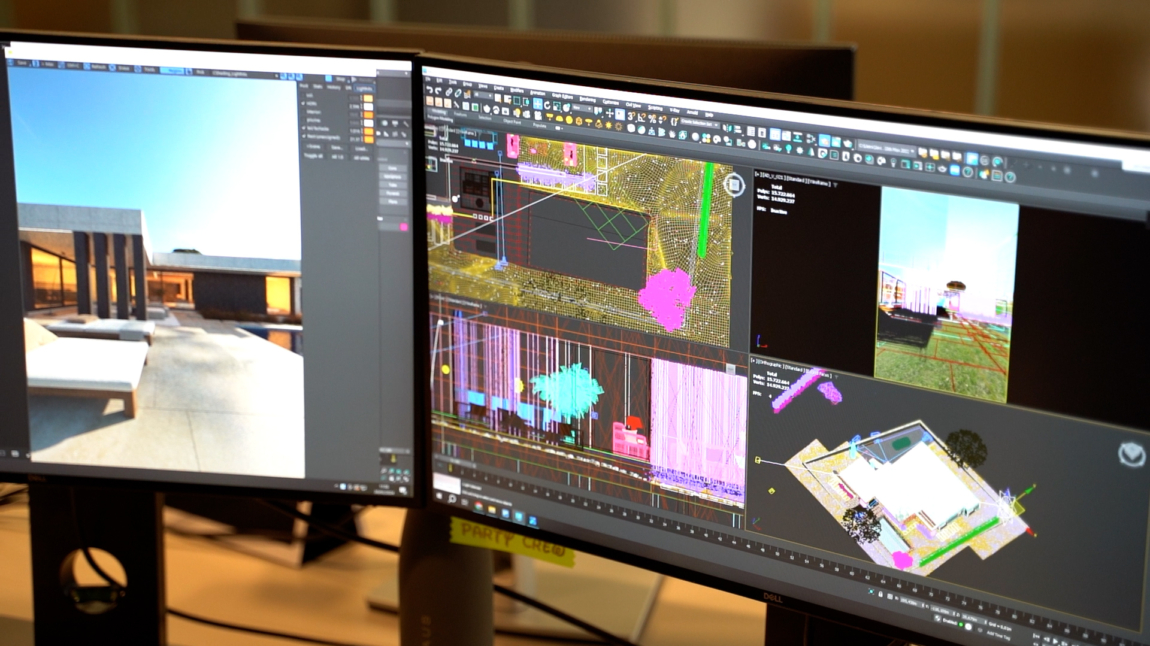
Digitalización del proyecto (BMI)
Producción en fábrica
Logística avanzada
Lean Construction en montaje


The level of industrialization makes it possible to classify construction systems according to the percentage of industrialized components within the Material Execution Budget (PEM).
This classification has direct implications for the economic viability of a real estate development.
A system based entirely on on-site construction.
Key characteristics:
For decades, this system has been the dominant model in the construction sector, but it presents significant limitations in terms of financial predictability and production efficiency.
Estimated reduction in construction time: ≈10%
The construction system remains traditional but incorporates digital tools that improve project planning:
The production system itself does not change, but project management improves.
Industrialized components between 5–15% of the Material Execution Budget (PEM)
The traditional construction system begins to incorporate specific industrialized components, while the overall system remains largely traditional:
At this stage, the first impact on the development’s cash flow appears, as part of the costs must be advanced to finance component manufacturing.
Industrialized components between 15–25% of the Material Execution Budget (PEM)
The level of industrialization increases through the integration of:
The economic impact mainly occurs in two areas:
On one hand, construction timelines are reduced, as fewer processes need to be carried out on-site.
On the other hand, the need for initial working capital increases, as manufacturers typically require advance payments to start producing the components.
Industrialized components between 25–35% of the Material Execution Budget (PEM)
At this level, complete structural subsystems of the building are industrialized:
This allows for a significant reduction in construction time.
This model is often used in build-to-rent residential developments or in projects located in areas with a shortage of skilled labor.
Industrialized components between 35–50% of the Material Execution Budget (PEM)
In addition to the structure and the building envelope, building services are also industrialized.
This model enables significant improvements in construction efficiency and quality control. It is particularly used in hotels, hospitals, student residences, office buildings, and rental housing developments.
The higher the level of industrialization, the greater the construction speed, quality control, and financial predictability.
Industrialized components ≥ 50–85% of the Material Execution Budget (PEM)
This represents the highest level of industrialization.
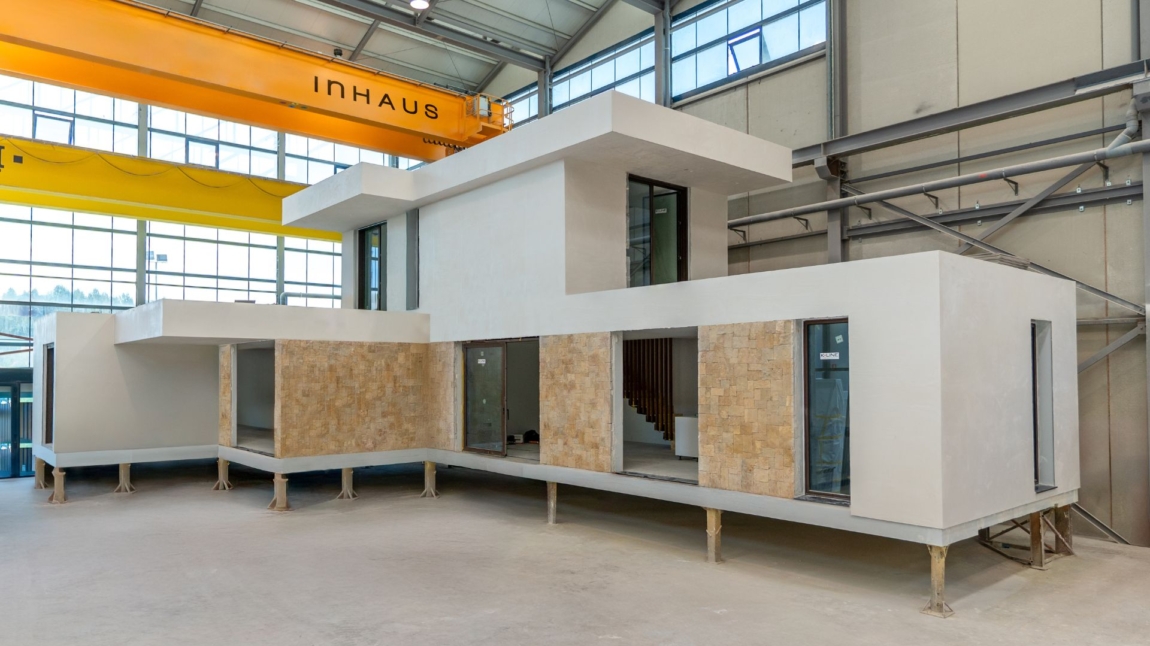
The building is constructed using complete three-dimensional modules that integrate:
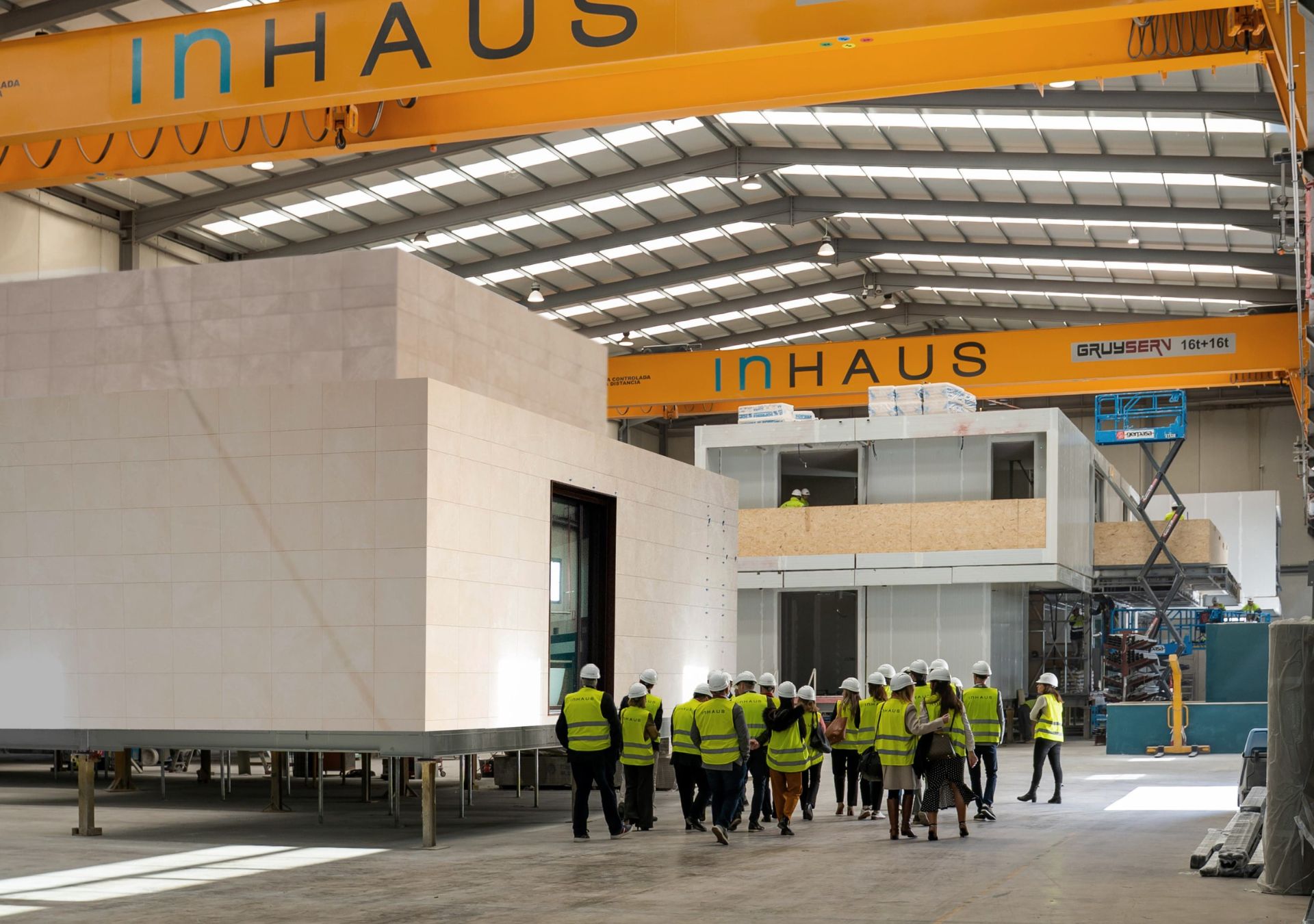
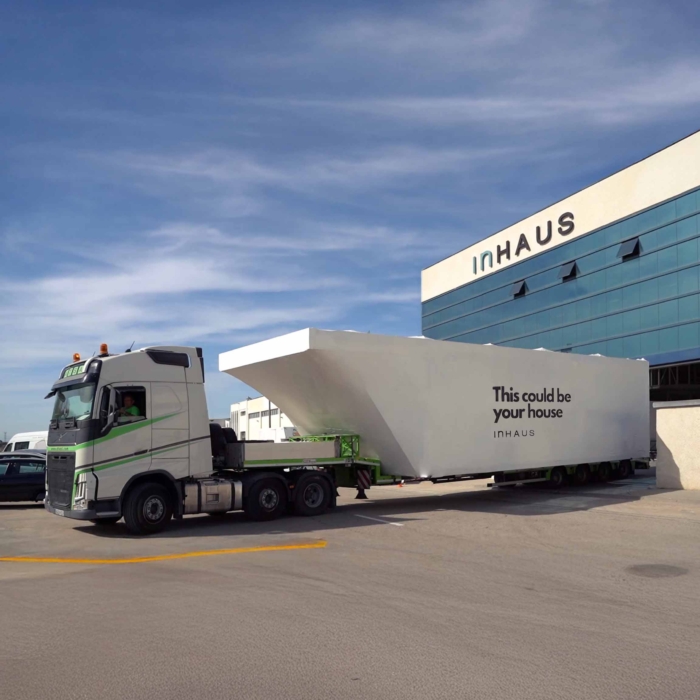
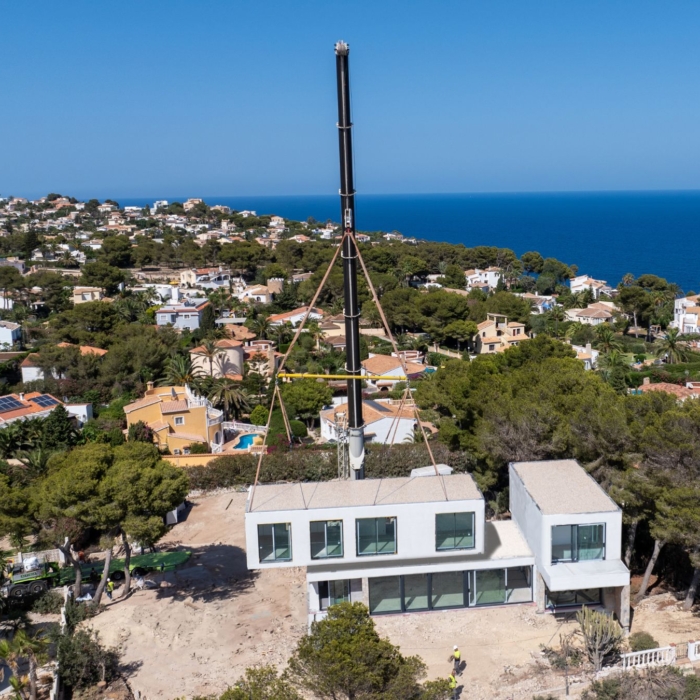
This is the system used by inHAUS, where a large portion of the building is manufactured off-site before being transported to the plot.
In three-dimensional volumetric systems, between 50% and 85% of the building’s value is manufactured off-site.
This shifts technical complexity—such as weather conditions, coordination between trades, on-site deviations, or execution variability—into a controlled industrial environment with standardized production processes.
Once this level of industrialization is reached, the building no longer behaves like a unique construction project carried out in a craft-based manner and instead functions as a product manufactured under industrial standards.
The Internal Rate of Return (IRR) is one of the most widely used indicators for evaluating the profitability of a real estate investment, and it depends on multiple factors:
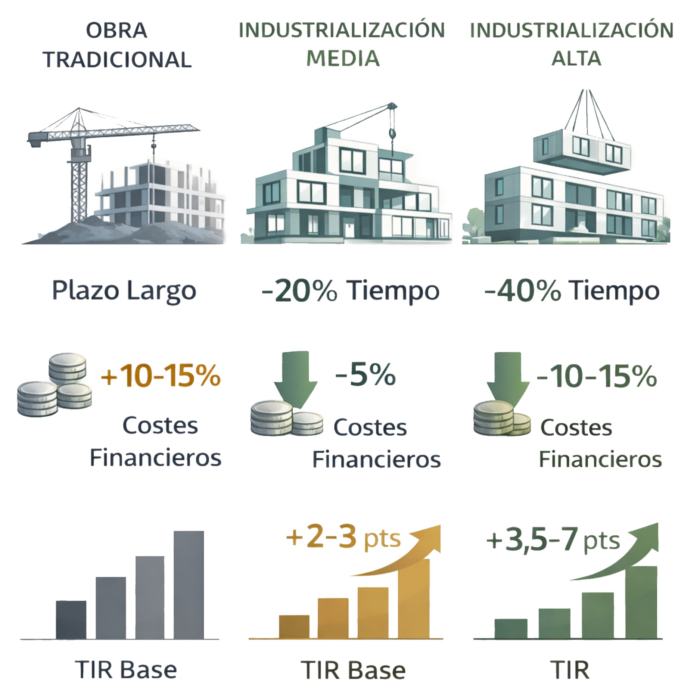
Time is one of the most decisive factors. When construction timelines are reduced, capital remains tied up for a shorter period, financing costs decrease, and revenue generation begins earlier.
According to various European studies on off-site construction, highly industrialized systems can reduce total construction timelines by 20% to 50% compared to traditional construction.
In financial terms, this implies:
One of the main advantages of industrialized systems is the reduction of financial risk.
In traditional construction systems, most of the work is carried out directly on-site, where multiple trades are involved and coordination between different stakeholders can lead to conflicts or inefficiencies. Industrialized construction reduces this risk by moving a large portion of the execution to controlled production environments.
Traditional Construction | Highly Industrialized Systems (Level 5–6) |
|---|---|
More than 80% of the work is carried out on-site | A large portion of the building is manufactured in a controlled environment |
Multiple trades are involved in different phases | The number of trades required on-site is reduced |
System conflicts or interferences can occur | Work is carried out using integrated or preassembled units |
Weather conditions affect the construction pace | The design is finalized before production begins |
Quality control is intermittent | |
Weather conditions affect the construction pace |
According to the Building Cluster, industrialization helps reduce the margin of error in measurements and certifications by working with systems that are manufactured and measured at their source. These are the main differences between traditional construction and highly industrialized building systems:
In practical terms:
The level of industrialization also affects the commercial performance of the asset.
When the construction system allows units to be produced using repeatable standards, the result is greater product consistency, fewer post-sale issues, and greater buyer confidence.
In addition, industrialization makes it possible to deliver multiple units simultaneously, avoiding phased deliveries that negatively affect the developer’s cash flow.
In large-scale developments (such as townhouses or multi-family housing), this capability allows entire phases to be launched to the market, improving sales absorption and accelerating the commercialization of the project.
In single-family housing, Level 6 systems ensure high performance quality, reduce dependence on local conditions, and provide real certainty in terms of costs and timelines. End customers perceive this stability as trust.
In multi-family developments, hospitality projects, or build-to-rent developments, the impact is even more evident. For the developer, shorter timelines mean earlier revenue generation, protecting the financial structure of the project and improving the return on investment (ROI).
The use of volumetric industrialized construction systems not only improves the technical efficiency of the project, but also introduces a clear economic and competitive advantage for developers:
In this context, industrialization stops being merely a technical choice and becomes a strategic business decision.
Although industrialized construction still represents a relatively small share of the residential sector in Spain (around 5–7%), its economic impact is particularly significant in certain scenarios:
When the level of industrialization is high, construction stops behaving like an unpredictable craft-based process and instead becomes a planned, measurable, and economically optimizable production system.
For this reason, the level of industrialization of a construction system should not be understood solely as a technical decision. It is a strategic variable that directly affects IRR, ROI, financial risk, and the speed at which a real estate development can be brought to market.
Whether you are an individual or a professional, do not hesitate to contact us for further information, to request a personalised quote or to make any enquiry.
In our Catalogue 111 you have more than a hundred models of houses to choose from. Register to access information and prices of all models.