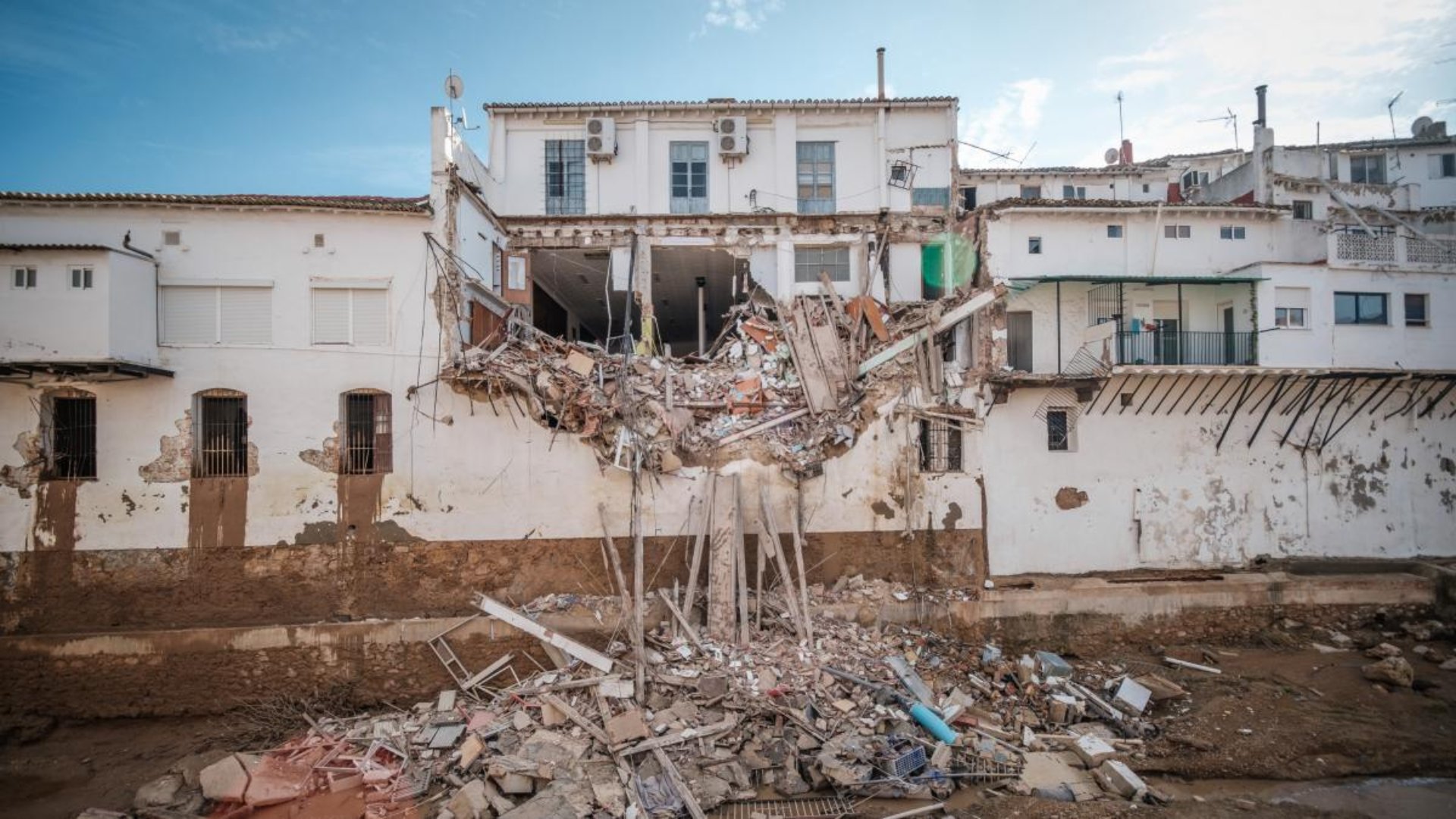
On 29 October 2024, the DANA storm that affected the Valencian Community caused one of the most severe events experienced in recent decades. Beyond the material damage and human impact, the consequences for residential housing were particularly significant.
Entire families lost their homes in numerous municipalities, creating an urgent need for real, rapid and scalable housing solutions.
This situation highlighted a structural limitation of conventional construction methods, as traditional delivery times are not compatible with emergency scenarios.
Reconstruction required new building models capable of delivering speed, certainty and production capacity. In response, the Generalitat Valenciana launched a housing replacement programme in the affected areas based on industrialised construction systems.
Through the Valencian Housing and Land Authority (EVHA), the Generalitat Valenciana launched the Plan VIVE DANA initiative. The programme is aimed at delivering housing through industrialised construction systems in municipalities affected by the floods, offering a strategy designed to respond to urgent housing needs while significantly reducing construction times.
The programme has an initial budget allocation of €25 million, including €15 million from the regional government and up to €10 million from European funding.
Many of the homes located within the affected municipalities cannot be rebuilt on their original sites, making relocation to alternative locations necessary.
The industrialised housing developments will be built on plots owned by EVHA. The plan initially foresees the construction of 250 homes distributed across several development packages:
These developments are tendered through public procurement procedures involving construction companies and industrialised building specialists.
Overall, Plan VIVE DANA represents a shift in public housing policy, introducing industrialisation as a key tool for reconstruction in emergency situations.

Casas inHAUS understood from the outset that the situation required an immediate response. Just one month after the DANA event, the company developed a dedicated proposal based on industrialised construction, focused on delivering complete residential developments within significantly shorter timeframes.
This vision has been materialised through the Plan VIVE DANA tenders, in which Casas inHAUS participates in a joint venture with CHM and in collaboration with COR Architecture + Design for the developments planned in Torrent, Albal and Utiel.
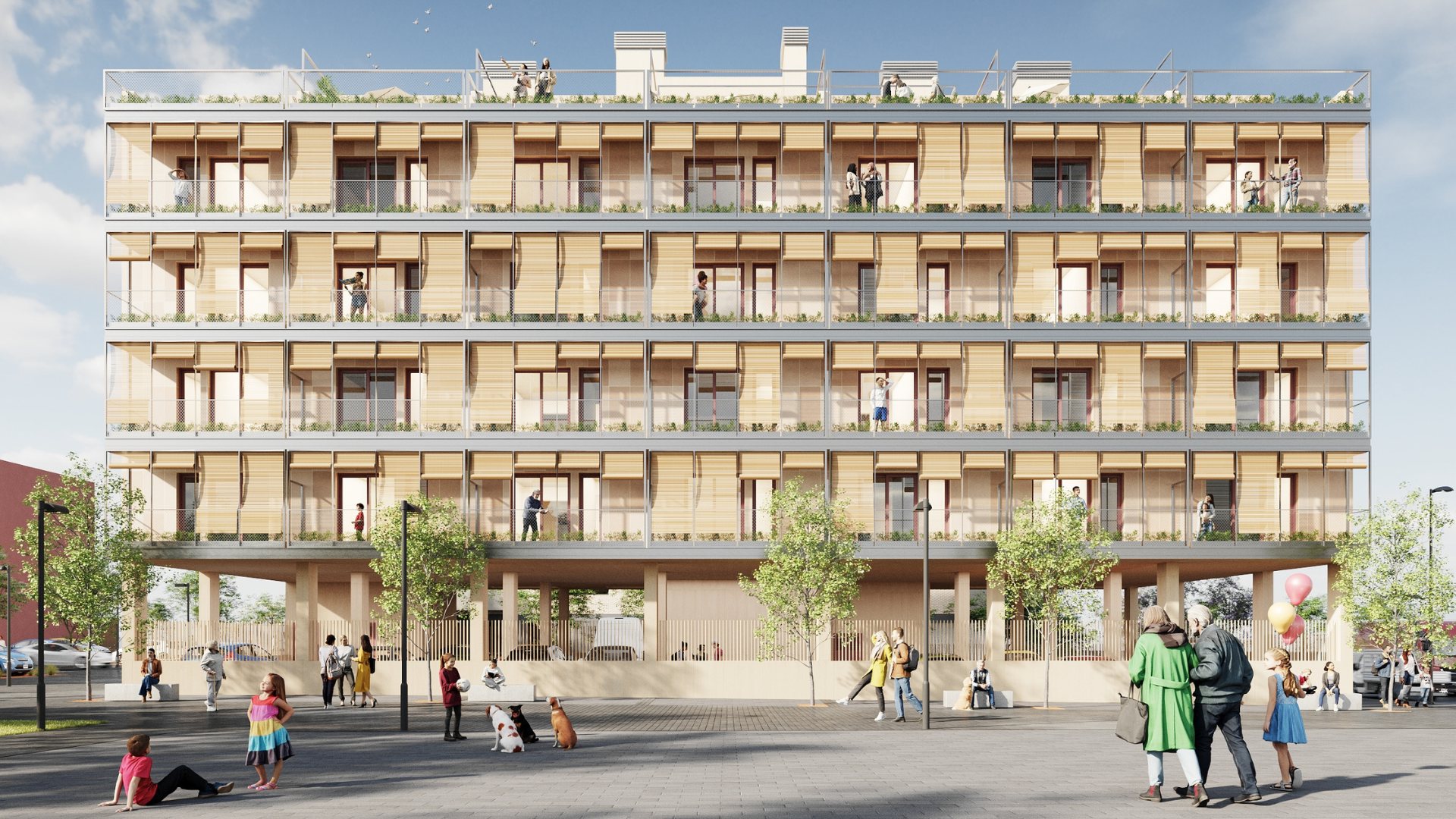
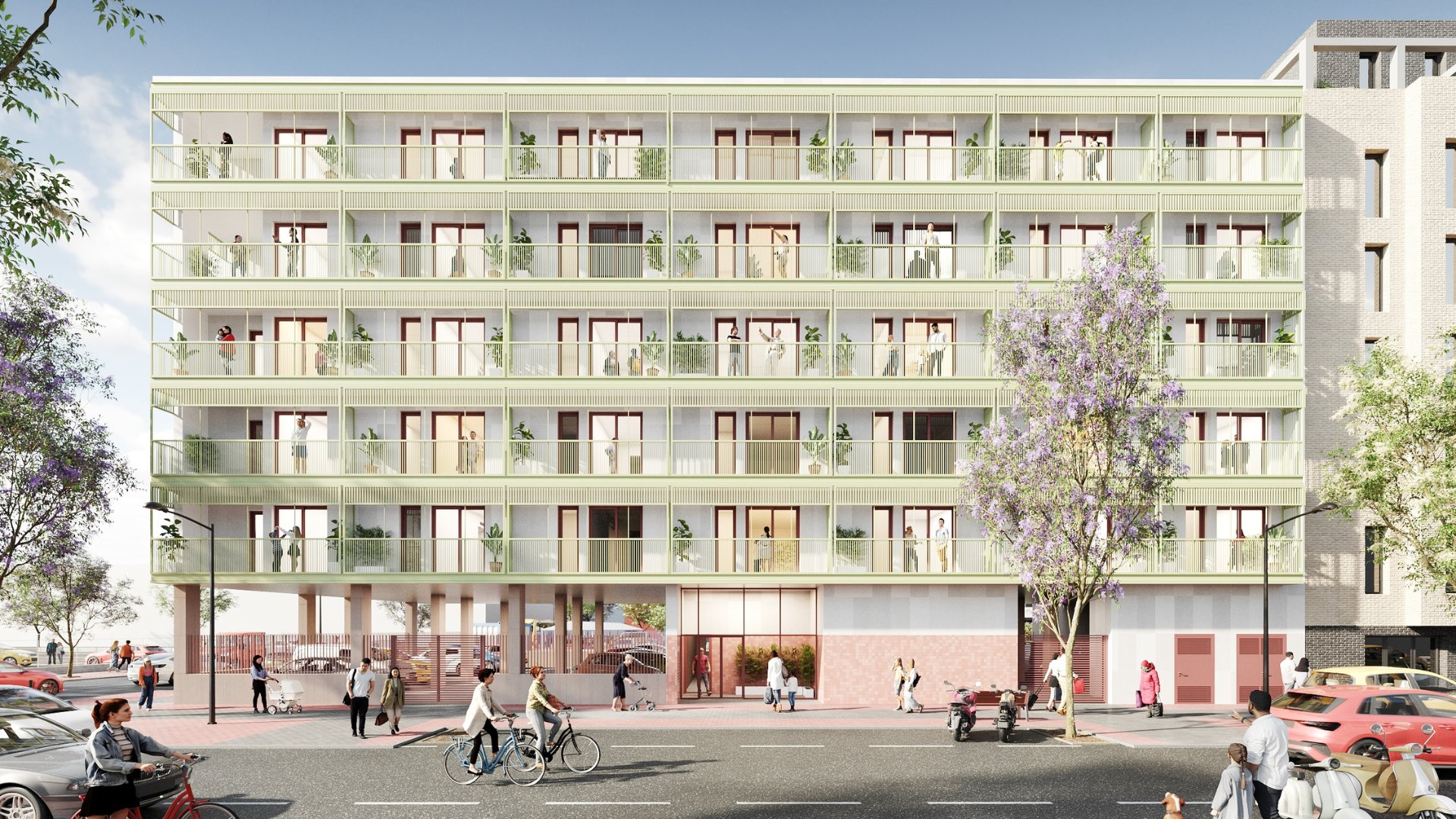
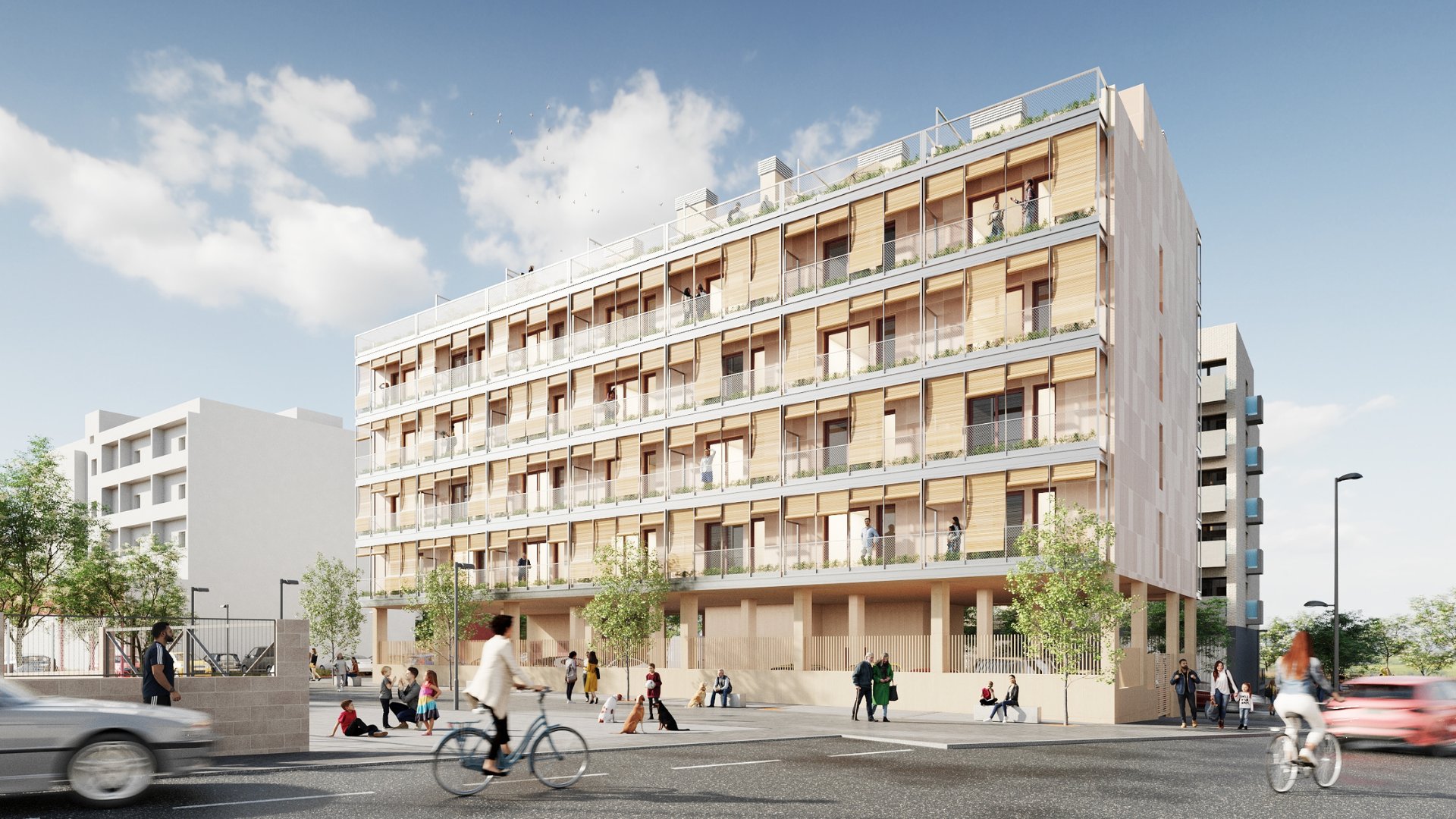
The proposal submitted by inHAUS is based on prefabricated volumetric modules, enabling a fast, efficient and sustainable construction process. The resulting buildings provide functional, naturally lit and well-ventilated homes designed to improve the quality of life of their occupants.
Module typology
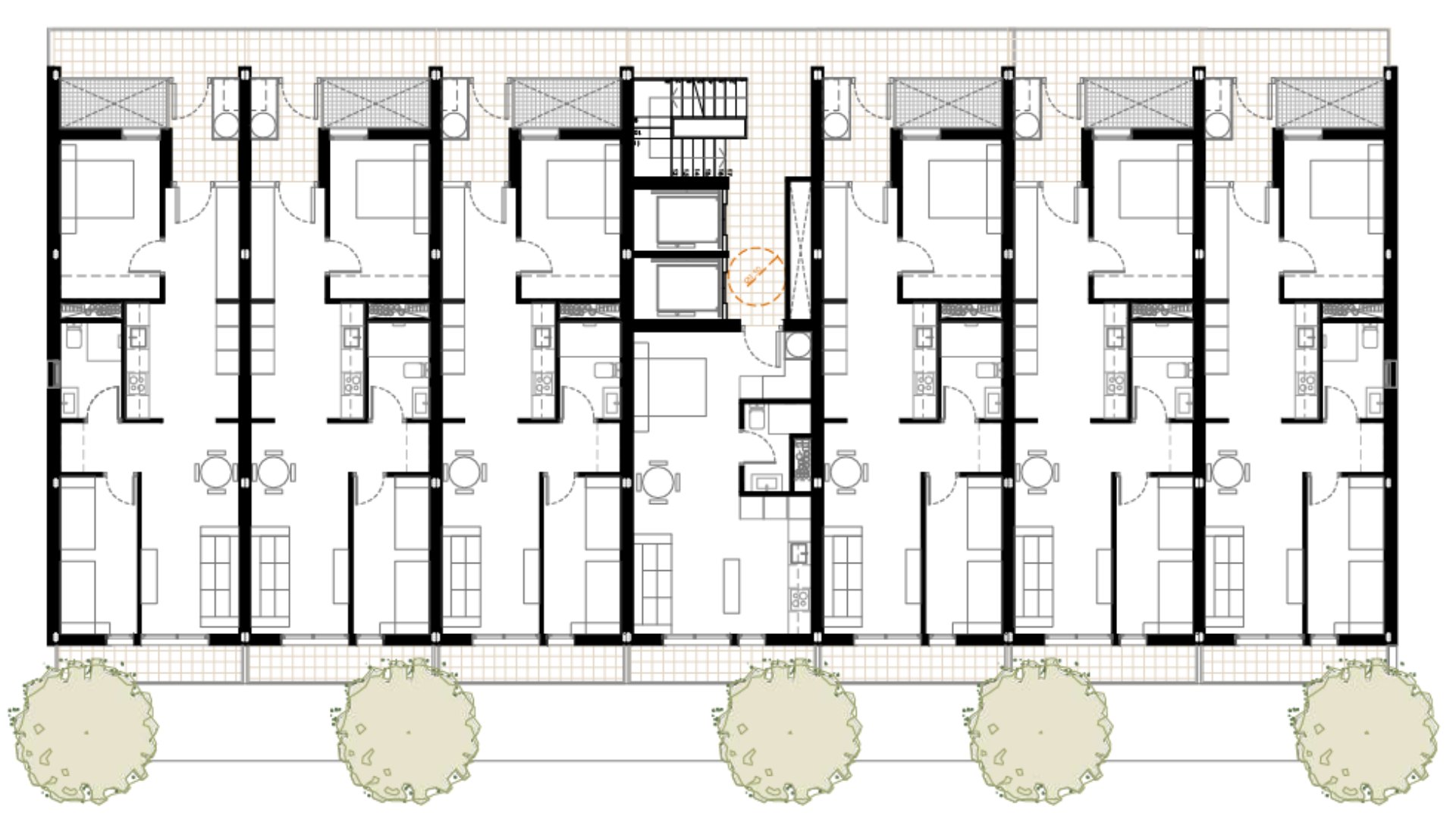
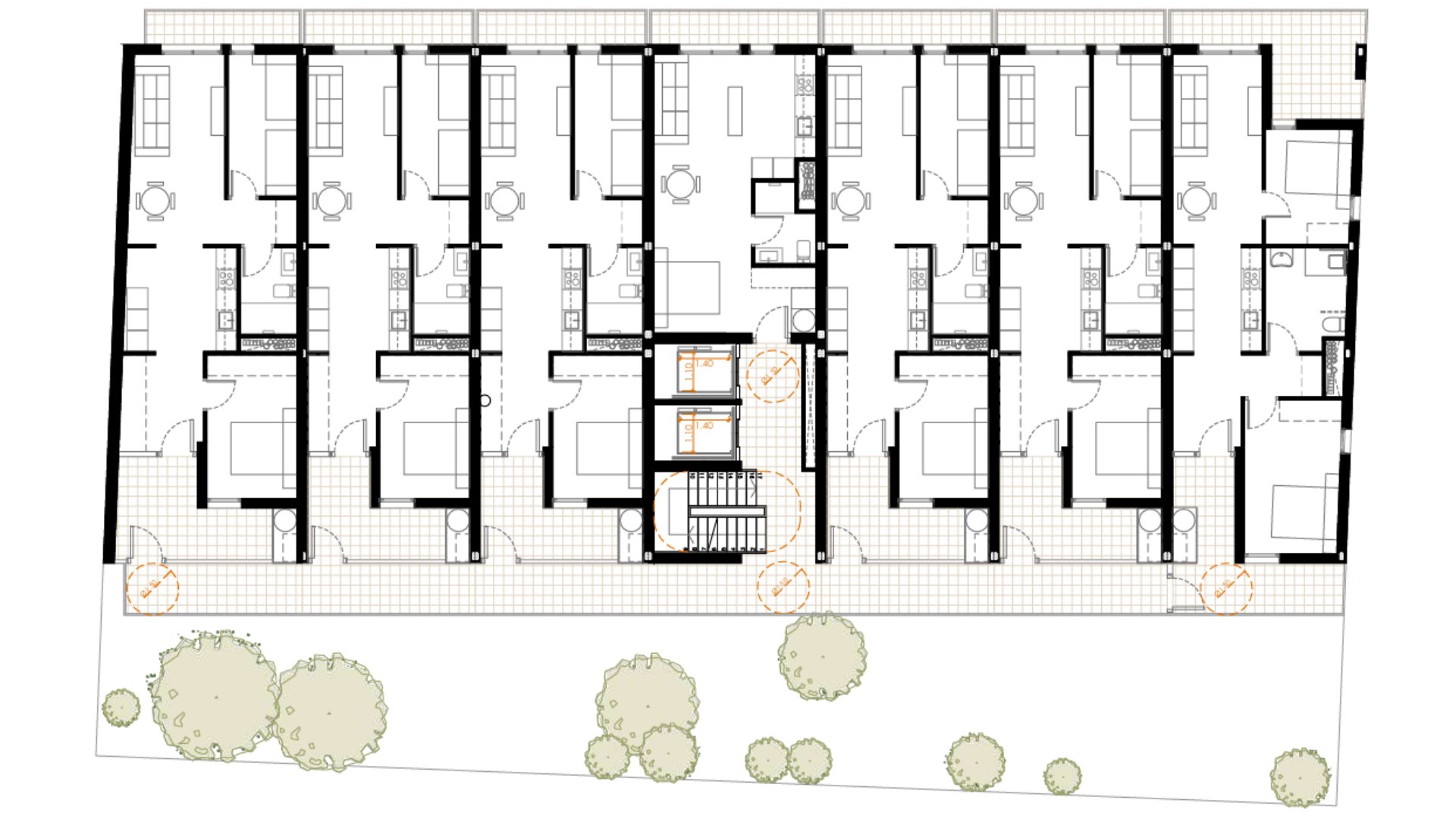
The proposal is based on a complete three-dimensional module measuring 5 metres in width and 17 metres in length, integrating the entire dwelling into a single volumetric element.
Each unit is fully manufactured offsite through a 3D industrialised construction process, incorporating structure, enclosure systems, installations and interior finishes.
Housing layout
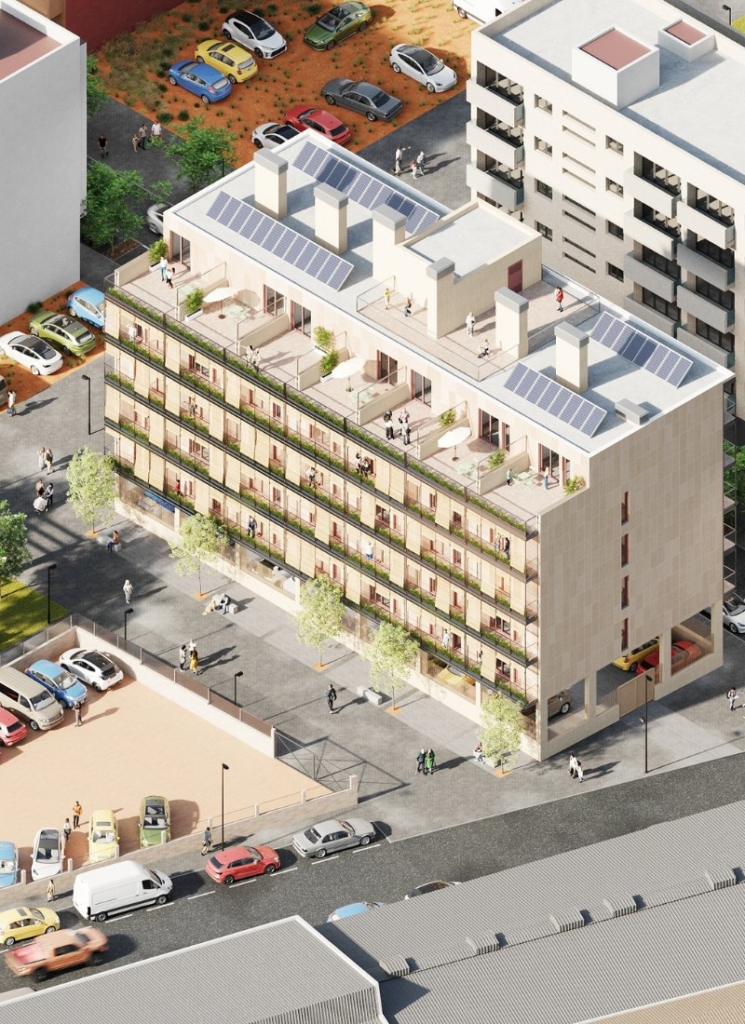
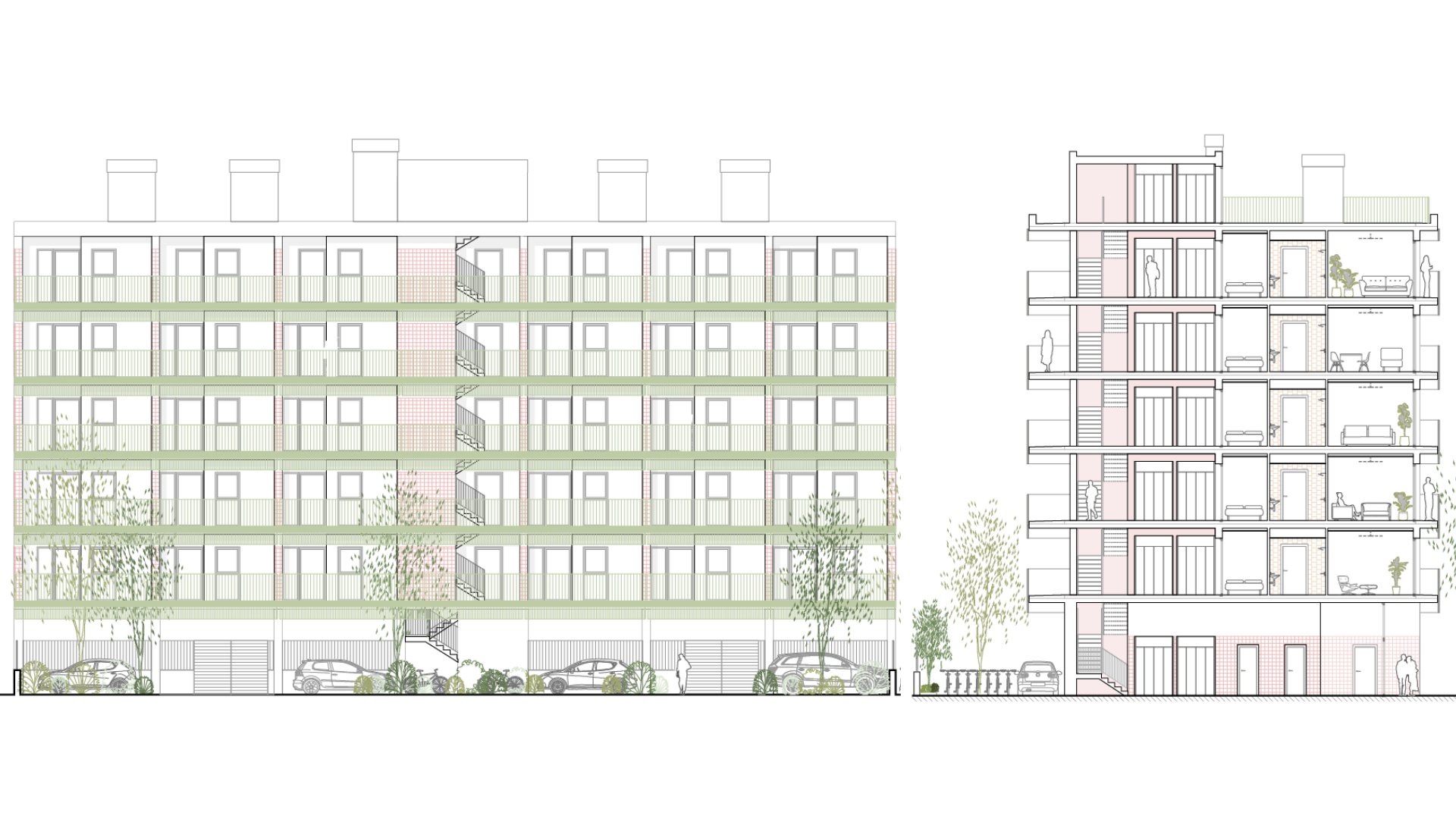
The building is elevated above an open ground floor level dedicated to parking.
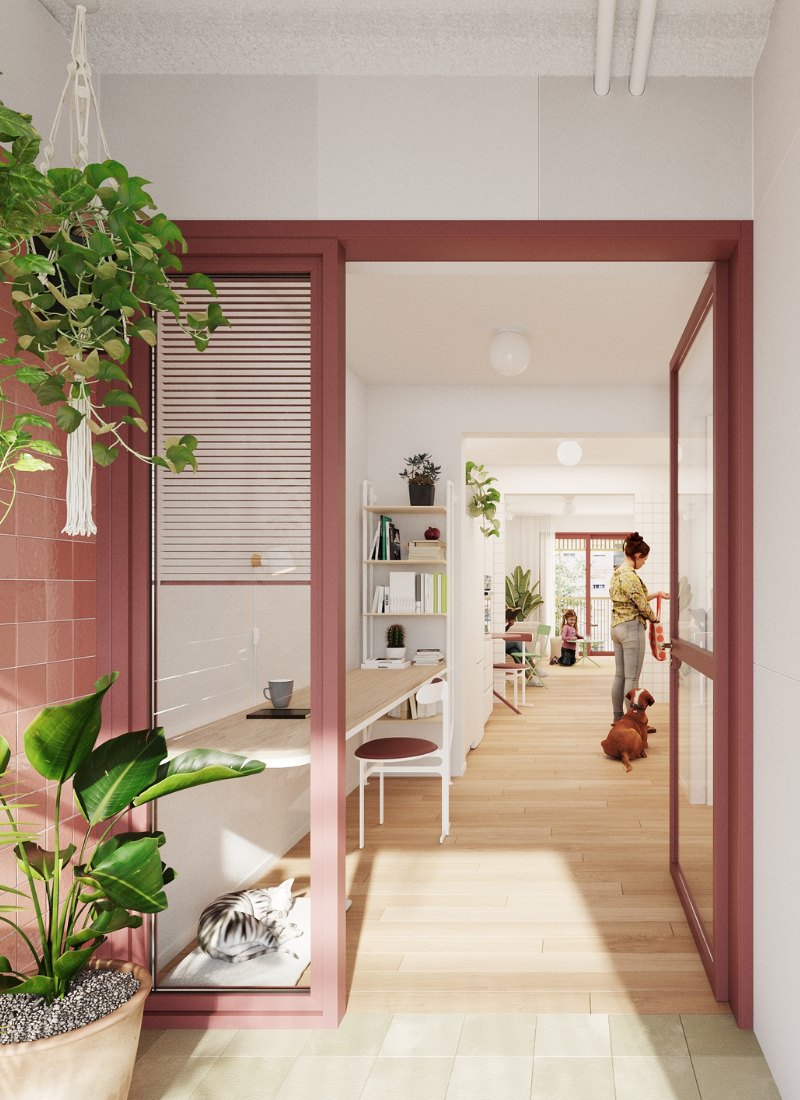
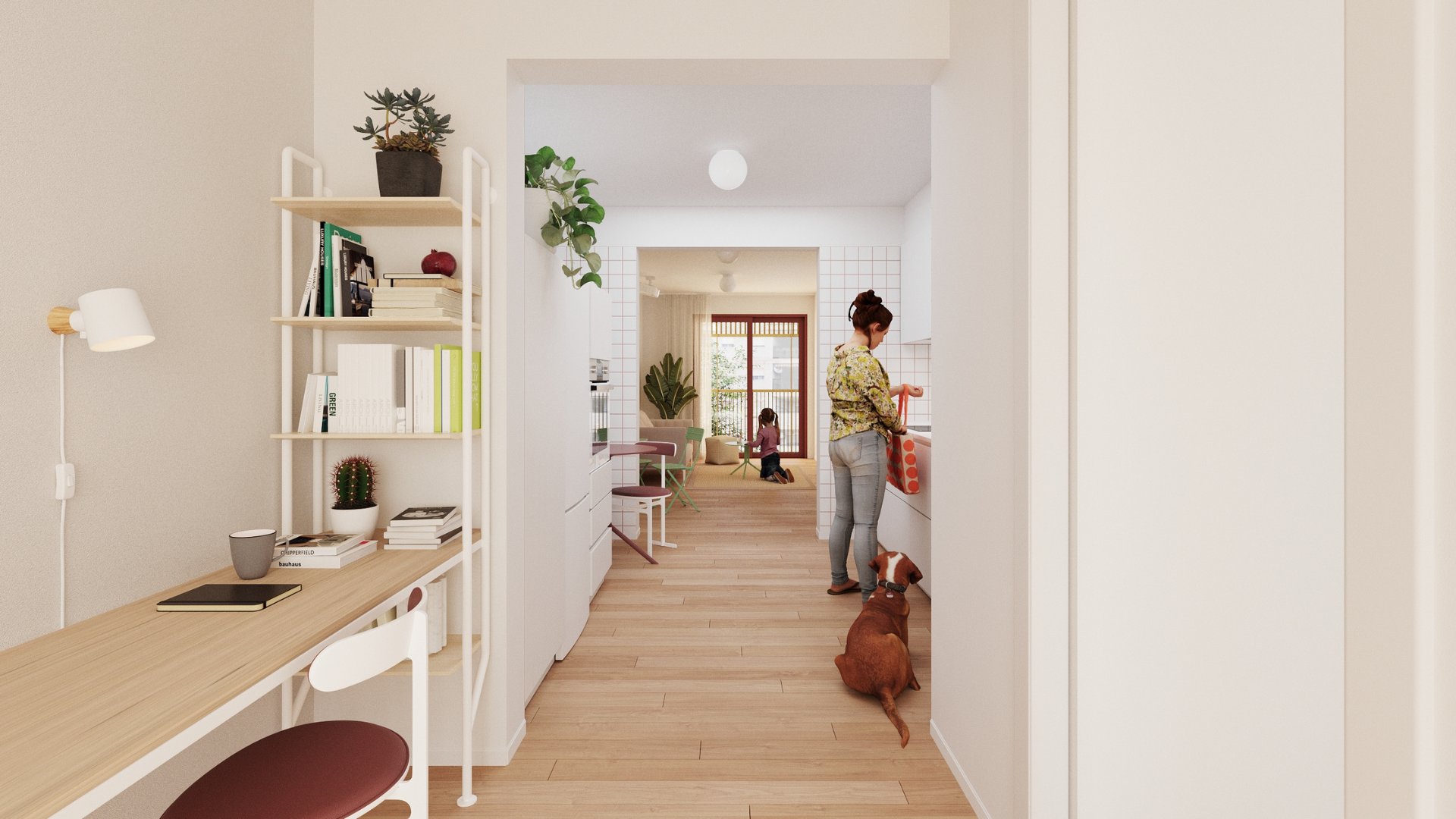
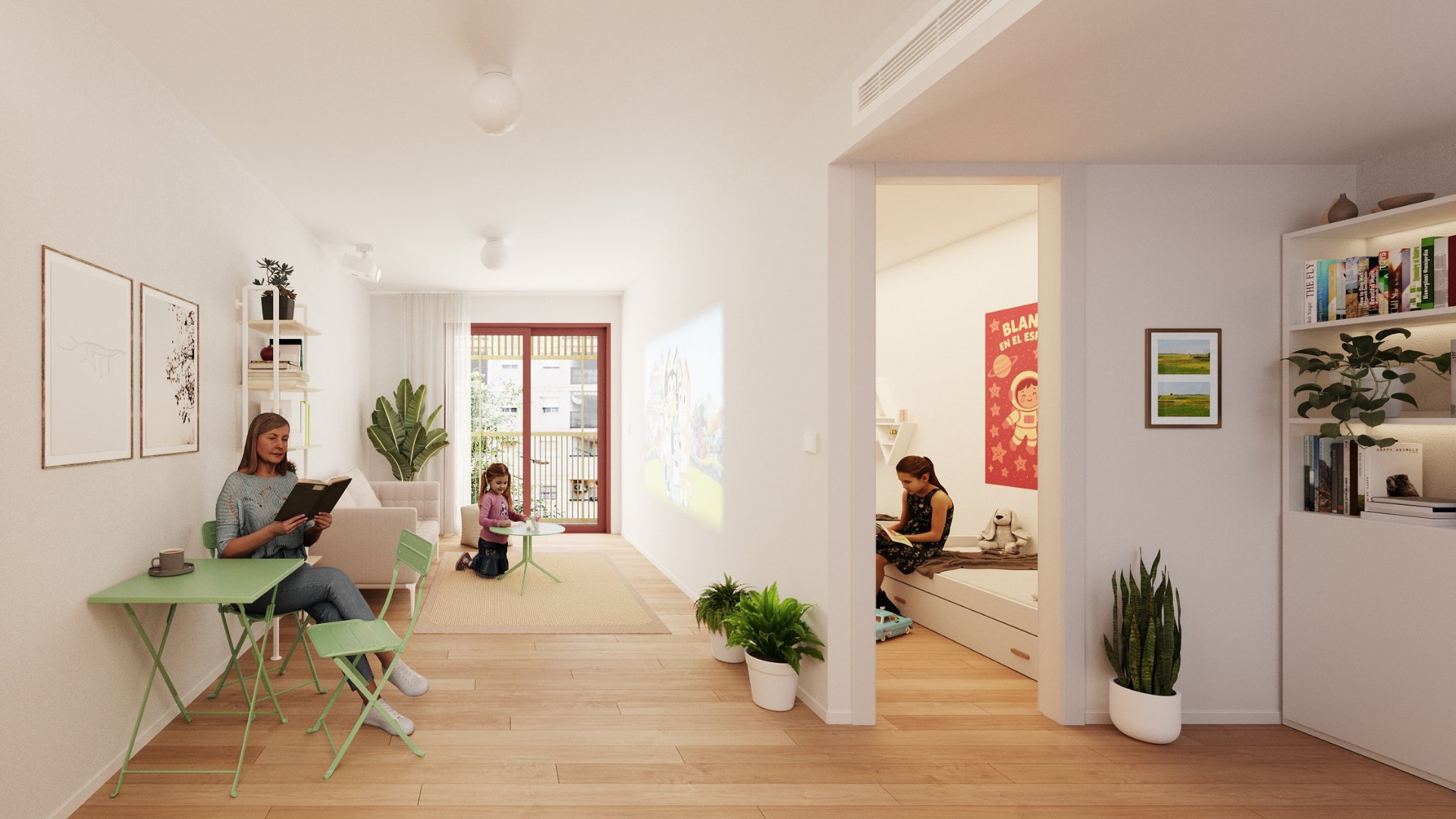
The dwellings benefit from dual orientation — and triple orientation at the corners — ensuring natural daylight and cross ventilation throughout every unit. The internal layout eliminates unnecessary circulation spaces and organises the home around a continuous central living area.
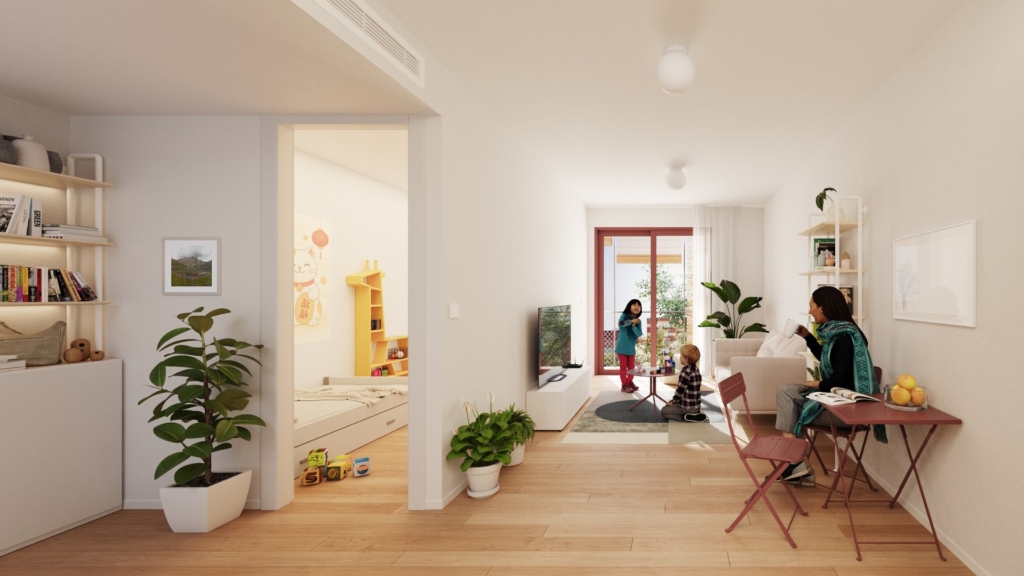
Most floor plans comprise an open-plan kitchen and living-dining space, two bedrooms, one bathroom and an entrance hall, although certain variations exist depending on the available floor area.
The buildings also include studio apartments and penthouses with alternative layouts and surface areas.
Depending on the typology, the homes provide a net usable area ranging between approximately 65 m² and 75 m².
Indoor–outdoor relationship
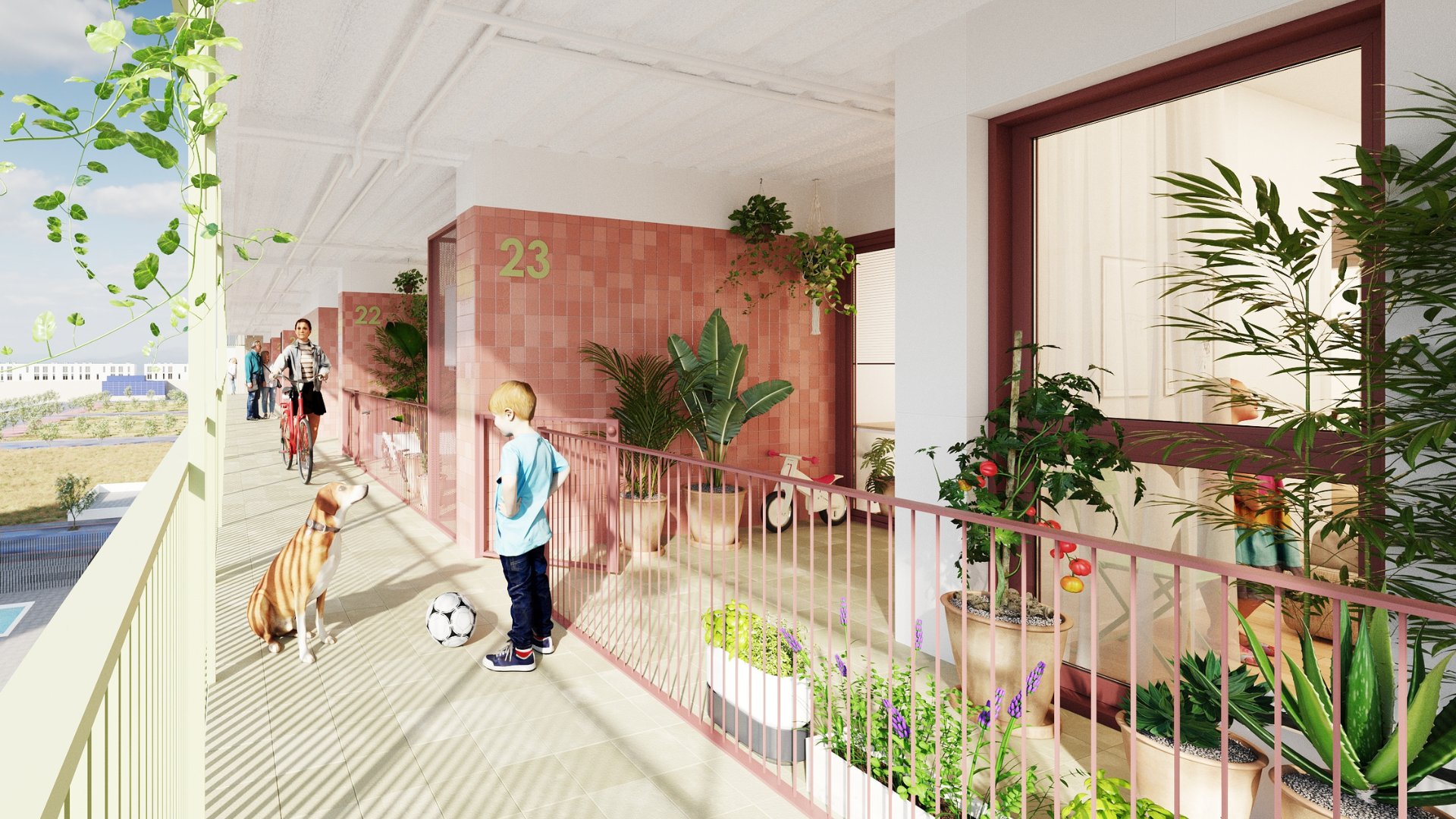
The access gallery faces the internal courtyard, creating a space designed to encourage interaction between residents.
The living room, dining area and kitchen are oriented towards the main façade, reinforcing the building’s urban presence.
Balconies are conceived as a natural extension of the home itself. Equipped with traditional Alicante shutters, they allow residents to regulate daylight, ventilation and privacy in a passive manner, adapting naturally to changing climatic conditions throughout the year.
Flexibility of use
The homes have been conceived as adaptable living environments capable of responding to evolving ways of inhabiting domestic space.
All units allow the integration of dedicated work areas within the home, whether in multipurpose rooms, living spaces or bedrooms, taking advantage of natural light and the spatial quality of each interior.
Whether you are an individual or a professional, do not hesitate to contact us for further information, to request a personalised quote or to make any enquiry.
In our Catalogue 111 you have more than a hundred models of houses to choose from. Register to access information and prices of all models.